

The Rise of BMX Freestyle: From Street Tricks to Olympic Glory
Discover the thrilling history of BMX freestyle — from 1980s street tricks and vert ramps to Olympic competition and global BMX culture today.
The Rise of BMX Freestyle: How a Rebellious Hobby Became a Global Phenomenon
BMX freestyle, once a rebellious pastime invented by adventurous kids on dusty suburban streets, has evolved into a respected, global sport celebrated in competitions, mainstream media, and even the Olympics. The story of how BMX freestyle rose from underground culture to international stardom is as thrilling as the tricks riders perform. In this blog post, we’ll take you through the history of BMX, the birth of freestyle BMX tricks, and how BMX culture captured the imagination of millions worldwide.
The Origins of BMX: From Dirt Tracks to City Streets
Before BMX freestyle made its mark, BMX itself was born out of a different craze: motocross. In the late 1960s and early 1970s, kids in Southern California were inspired by motocross racing and began mimicking their heroes by racing bicycles on dirt tracks. Lightweight Schwinn Sting-Rays and similar bikes were modified for jumps, bumps, and fast sprints. This new form of racing became known as Bicycle Motocross — or BMX.
As BMX culture grew, racing became more organized. Tracks were built, races were scheduled, and local clubs popped up. By the mid-1970s, BMX racing was booming in the United States and began spreading internationally. But as BMX racing flourished, a small but daring group of riders started using their bikes for something different — tricks.
The Birth of BMX Freestyle
While many credit Bob Haro — often called the “Father of Freestyle” — with pioneering BMX freestyle, the movement grew organically from kids experimenting in urban environments. Empty pools, drainage ditches, parking lots, and skateparks became playgrounds where riders pushed their bikes beyond racing into expressive stunts.
In 1978, Bob Haro began performing tricks and stunts at BMX races and exhibitions, wowing crowds with his balance, agility, and creativity. His performances helped inspire an entire generation. Haro later founded Haro Bikes, the first company dedicated to freestyle BMX frames and parts, helping riders worldwide access equipment designed for tricks rather than racing.
By the early 1980s, freestyle BMX tricks had diversified into distinct styles:
- Flatland: Riders performed intricate tricks on flat surfaces, often balancing on one wheel or spinning the bike underfoot.
- Vert: Riders launched off vertical ramps and halfpipes, pulling aerial spins and flips.
- Street: Using urban obstacles like stairs, rails, and ledges as their canvas, riders blended technical precision with fearless creativity.
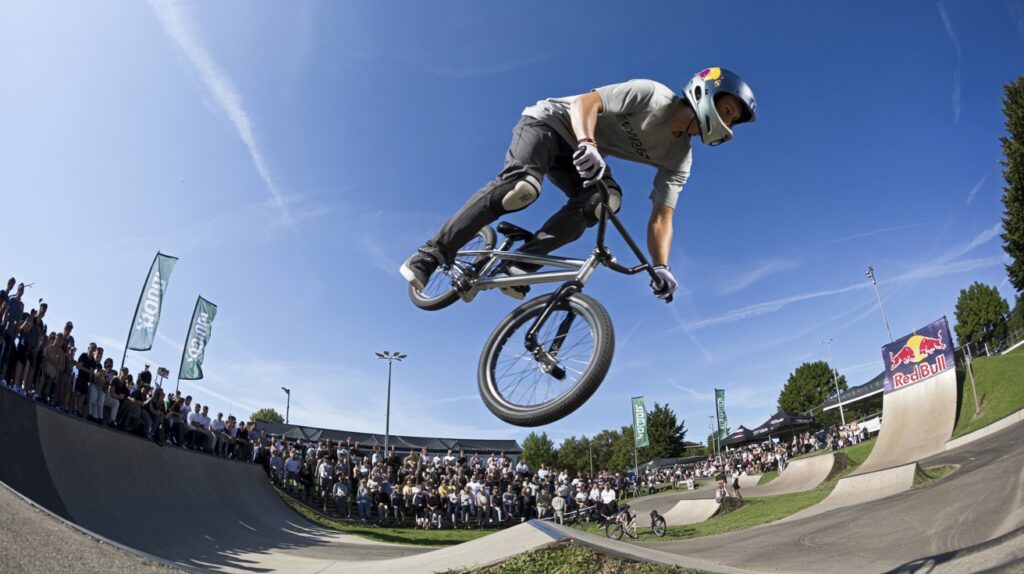
- Park: A hybrid style performed in skateparks, combining vert ramps, bowls, and street elements.
The Golden Era: 1980s Boom of BMX Freestyle
The 1980s is often hailed as the golden era for BMX freestyle. Magazines like BMX Action and Freestylin’ documented the explosive growth of the scene. Dedicated freestyle competitions, such as the American Freestyle Association (AFA) series, drew large crowds and helped solidify BMX freestyle as more than just a hobby — it was a sport and an art form.
Popular brands like GT, Haro, and Skyway began releasing bikes specifically built for freestyle, with reinforced frames, gyro headsets (allowing handlebars to spin freely without tangling cables), and pegs for standing during tricks.
The mainstream caught on too. BMX riders appeared in films, TV shows, and commercials. Notably, the 1983 Australian cult classic BMX Bandits, starring a young Nicole Kidman, gave international audiences a cinematic glimpse of BMX culture in action.
However, like many youth-driven trends, BMX freestyle’s mainstream popularity faded towards the early 1990s. Competitions dwindled, sponsors pulled back, and skateboarding temporarily stole the limelight. Yet, the passion of core riders never died.
The Underground Persistence and Modern Resurgence
Throughout the 1990s, BMX freestyle remained alive in underground scenes. Riders continued innovating, building backyard ramps and pushing freestyle BMX tricks to new heights. The street riding subculture, in particular, flourished thanks to the accessibility of urban environments and the rise of DIY videos circulated on VHS tapes.
A turning point came in 1995 with the launch of the X Games, ESPN’s extreme sports competition. BMX freestyle was back on TV screens, now reaching global audiences. Vert legends like Dave Mirra and Mat Hoffman became household names, inspiring a new generation.
Hoffman, in particular, is credited with pushing the sport’s boundaries, introducing mega ramps and pioneering jaw-dropping aerial tricks that redefined what was possible on a BMX bike. His advocacy also helped BMX secure a place in larger competitions and boosted its legitimacy.
BMX Freestyle Enters the Olympics
Perhaps the greatest validation of BMX freestyle’s rise came in 2017, when the International Olympic Committee announced that BMX freestyle would debut at the 2020 Tokyo Olympics. The inclusion marked a monumental achievement, recognizing decades of grassroots passion, innovation, and athletic excellence.
In Tokyo, audiences around the world witnessed riders like Logan Martin (Australia) and Charlotte Worthington (UK) execute mind-blowing tricks — including the first-ever 360 backflip in Olympic competition — on the biggest sporting stage. The event captured not only the technical prowess of athletes but also the creative spirit that defines BMX culture.
The Enduring Appeal of BMX Freestyle
Today, BMX freestyle continues to thrive both as a competitive sport and a lifestyle movement. Modern riders benefit from advancements in bike technology, safer parks, and widespread media exposure through platforms like YouTube, Instagram, and TikTok. Young riders can learn freestyle BMX tricks from tutorials, compete in global contests, or simply enjoy sessions with friends at local skateparks.
Brands, too, have adapted — producing signature frames, apparel, and gear that blend performance with streetwear style. Major competitions like Simple Session, FISE World Series, and Red Bull BMX events ensure that elite riders have ample stages to showcase their talents.
Yet, at its core, BMX freestyle remains rooted in freedom, creativity, and community. Whether it’s a kid pulling their first bunny hop on a quiet street or a pro launching into a 540 flair in front of thousands, the essence of BMX culture endures: pushing limits, expressing individuality, and having fun on two wheels.
Conclusion
The rise of BMX freestyle is more than just a story of tricks and competitions — it’s a testament to how youthful rebellion, creative ingenuity, and grassroots passion can spark a worldwide movement. From California dirt tracks to Olympic podiums, BMX freestyle has carved its place in sports history and shows no signs of slowing down.
So, whether you’re a seasoned rider, a fan, or someone inspired to pick up a bike for the first time, remember this: BMX freestyle isn’t just about the tricks — it’s about the ride.
6 Comments